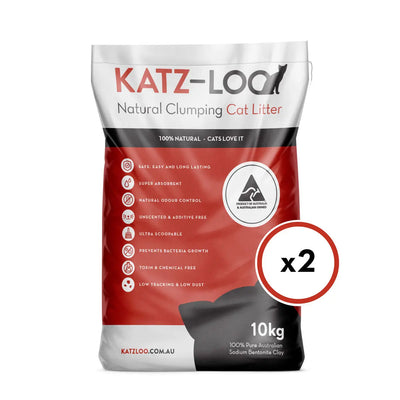
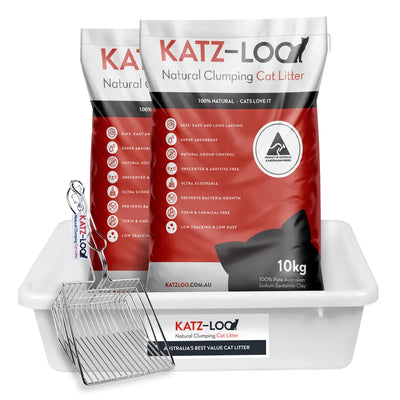
Cats are creatures of habit, which is why switching to a new litter can sometimes feel like a delicate operation. Whether you’re choosing a healthier, more eco-friendly litter, upgrading to a premium clumping litter like Katz-Loo Natural Clumping Litter, or pairing our litter with an automatic self-cleaning box, the transition doesn’t have to be stressful.
With the right steps - and a bit of patience - you can help your cat adjust smoothly and confidently.
And you know what else - We guarantee that your cat will use Katz-Loo, or you get your money back (including shipping).
Here’s your complete guide to making the big switch a success.
Why Switching Cat Litter Matters
Litter plays a huge role in your cat’s comfort, hygiene, and health. The right litter:
- reduces odour
- minimises tracking
- improves clumping and cleaning
- keeps paws clean and dry, and
- supports a healthier litterbox environment.
However, even the best litter in the world won’t work if your cat refuses to use it - which is why a gradual transition is key. If your cat won't use the new litter, understanding the underlying reason is key to solving the issue.

Go Slow With the Switch
There are several methods you can use to transition your cat. The two most reliable are outlined below. What they both have in common is that the most common reason a cat won't use a new litter is a rapid change.
However don't be surprised if your cat starts using Katz-Loo before you've finished filling the tray!
For other litters, or more particular cats, pick one of the methods below to try.
Method 1:
Fill the tray with your new litter as directed, then cover it with a thin layer of your previous litter, say 1-2cm.
Once the litters have blended through use, refresh the tray completely wiht the new litter only.
Method 2:
Gradually blend the new litter into the old over 7–10 days:
- Start with 75% old litter and 25% new.
- Over the next 7–10 days, slowly adjust the ratio:
Days 1–3: 75% old / 25% new
Days 4–6: 50% old / 50% new
Days 7–9: 25% old / 75% new
Day 10+: 100% new litter - Watch your cat for signs of discomfort or avoidance.
- Don’t rush—some sensitive cats may need more than two weeks.
If you do experience any issues, remember that patience is crucial; forcing the issue can trigger litter box aversion.
Mind the Box and Its Placement
- Don’t rearrange the furniture or move the litter box during a transition.
- A clean box encourages acceptance of the new litter. Scoop at least once daily (twice or more for multi-cat homes) and maintain the right litter depth — typically 7–10cm.
Reducing other changes in your cat’s environment helps them focus only on adapting to the new litter.
Reward and Reassure
Positive reinforcement goes a long way.
When your cat uses the litter box during the transition:
- offer praise,
- give a gentle pat,
- or reward with a treat.
This builds positive associations with the new litter and reduces stress.
Troubleshooting: If Your Cat Still Won’t Use the Litter
If your cat refuses to use any box with the new litter, don’t panic. There are logical steps to retrain and reassure your pet.
- Return to the original litter temporarily and restart the mix-in process more slowly.
- Clean any places where your cat has “missed” with an enzyme-based cleaner to erase scent cues.
- Sometimes, skipping a day or two between increases lets your cat adjust more comfortably.

When to Contact Your Veterinarian
Occasionally, a cat won't use their new litter due to a medical issue. If your cat is urinating outside the box, straining, or seems uncomfortable, consult your vet. Bladder infections, kidney conditions, or arthritis can affect litter box use. Always rule out health issues before blaming behavior alone.
A change in litter can be a big deal for some cats, and a non-event for other. With patience and observation, you can ensure any issue resolves smoothly. By mixing the litter gradually, keeping the box clean, and paying attention to your cat’s comfort, you can make the switch seamless and stress-free. Remember, every cat is unique—matching your pace to their needs is the key to a happy household.
If you capture your cat using Katz-Loo Clumping Litter, be sure to tag us in your social posts!
Follow us:
Facebook
Instagram
Tiktok


